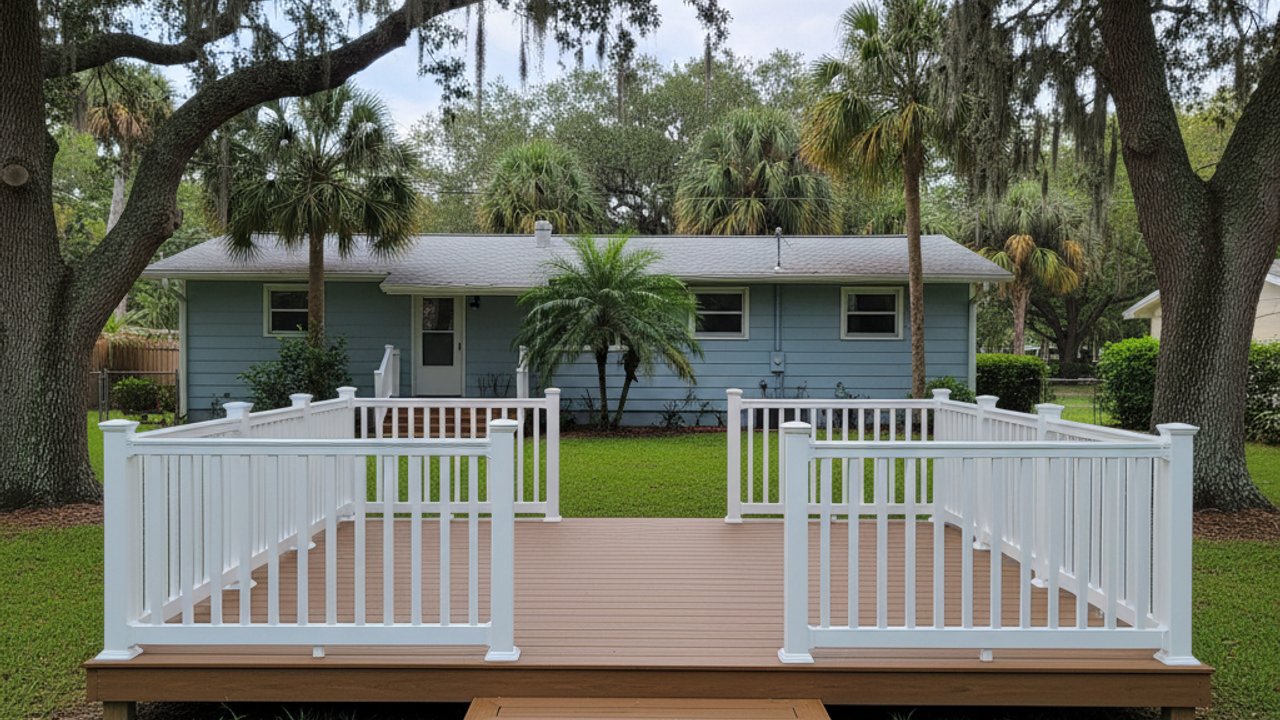
Most deck problems in Miami Gardens don't show up in year one. They show up in year three, when a post that was never poured deep enough starts to lean, or when the fasteners a builder used to save money have rusted through under the ledger board. Picking the right person for the job matters more here than in a lot of the country, because this county has its own rules about wind, its own soil, and its own weather pattern that will find every shortcut eventually.
The permit is not optional here
Miami-Dade County sits inside the High Velocity Hurricane Zone, which is a fancy way of saying the building code assumes a hurricane is coming for your deck at some point and makes you build for it. Railings, ledger attachments, and any roofed structure like a pergola or screened porch have to meet wind load numbers that don't apply in most of the country. That means the materials used need a current Notice of Acceptance, and the fasteners need to be rated for it, not just whatever was on the shelf.
A permit through the city or county building department triggers at least two inspections on a typical deck job: one at the footing stage before anything gets covered up, and a final once the structure and railings are done. A builder who tells you permits slow things down or cost too much is telling you they'd rather skip the part where someone independent checks their footings. That inspection is the one thing standing between you and a deck that fails a home inspection when you sell the house in eight years.
What the ground and the water actually do to a deck
A lot of Miami Gardens sits on sandy soil over limestone, and in plenty of yards that limestone is close enough to the surface that digging a proper footing means breaking through rock, not just soil. Other lots, especially older ones near canals or low spots, have a water table close enough to grade that a footing dug in the dry season looks fine and then sits in standing water by September. A footing that isn't poured to the right depth, usually 24 to 36 inches depending on the load and the soil report, will move. Sometimes it takes a year, sometimes five, but it moves.
Drainage under the deck matters just as much as what's holding it up. South Florida gets a hard afternoon thunderstorm most days from June through September, and a deck built flat over unimproved ground will trap that water underneath, which is exactly the environment subterranean termites and wood rot want. A builder who knows the area will grade the ground under the deck away from the house and often add a drainage system or vapor barrier rather than just framing over dirt and hoping.
Materials that hold up to a Miami summer
Pressure-treated pine is still the cheapest way to frame a deck here, but it has to be rated for ground contact if any part of it sits near or in soil, and even then it needs sealing on a schedule, roughly every 12 to 18 months, because the UV here is harder on a coating than it is almost anywhere else in the state. Skip a season and the wood grays and starts to check.
Composite decking costs more up front but doesn't need that staining cycle, which is part of why it's become the default choice for a lot of homeowners here. It still needs to be installed with the right gap between boards, usually around 3/16 inch, because composite expands and contracts with heat more than people expect, and a deck installed tight in January will buckle by July. Fasteners matter more here than in a dry climate too. Hot-dipped galvanized or stainless hardware costs a little more than standard, but standard hardware in this humidity and salt air can start corroding within a couple of years, especially anywhere close to the coast.
License, insurance, and the contract
Florida requires a contractor building a deck attached to a structure to hold either a certified or registered building contractor license, and you can look that license up yourself before you sign anything. Ask for proof of general liability insurance and workers' comp coverage too. If a subcontractor falls off a ladder in your backyard and the builder has no coverage, that liability can land on you as the homeowner.
Get the scope in writing: square footage, decking material and brand, fastener type, railing style, whether the permit and inspections are included in the price, and a payment schedule tied to actual progress rather than a big chunk up front. Florida law limits how much a contractor can collect before work has started, and a builder asking for half the job in cash before a permit is even pulled is not following that.
What to walk away from
- Anyone who quotes a price without seeing the yard, the soil, or asking about the water table.
- No mention of a permit, or a permit described as something they'll "take care of" without a number you can look up yourself.
- Cash-only pricing with no written contract.
- Vague answers about footing depth or fastener type. If they can't tell you what's holding the deck up, they haven't thought about it.
- Pressure to sign the same day, especially paired with a discount that disappears if you don't.
None of this is complicated once you know what to ask, but it's a lot to check on your own while you're also trying to pick a decking color. If you'd rather talk through a design and the permit process with someone who builds in Miami-Dade every week, take a look at our deck builder work and get a second opinion before you sign with anyone.